Opt Indie Books
  • OPT IN
  • Spotlight
    • Bookshops
    • Publishers
  • Events
  • Books of the Year 2025

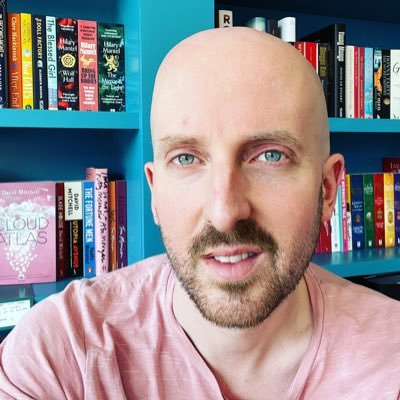
Alexander Call

bert's books, swindon

This week’s Bookshop Spotlight feature comes from the heart of Swindon’s Old Town with Bert’s Books.
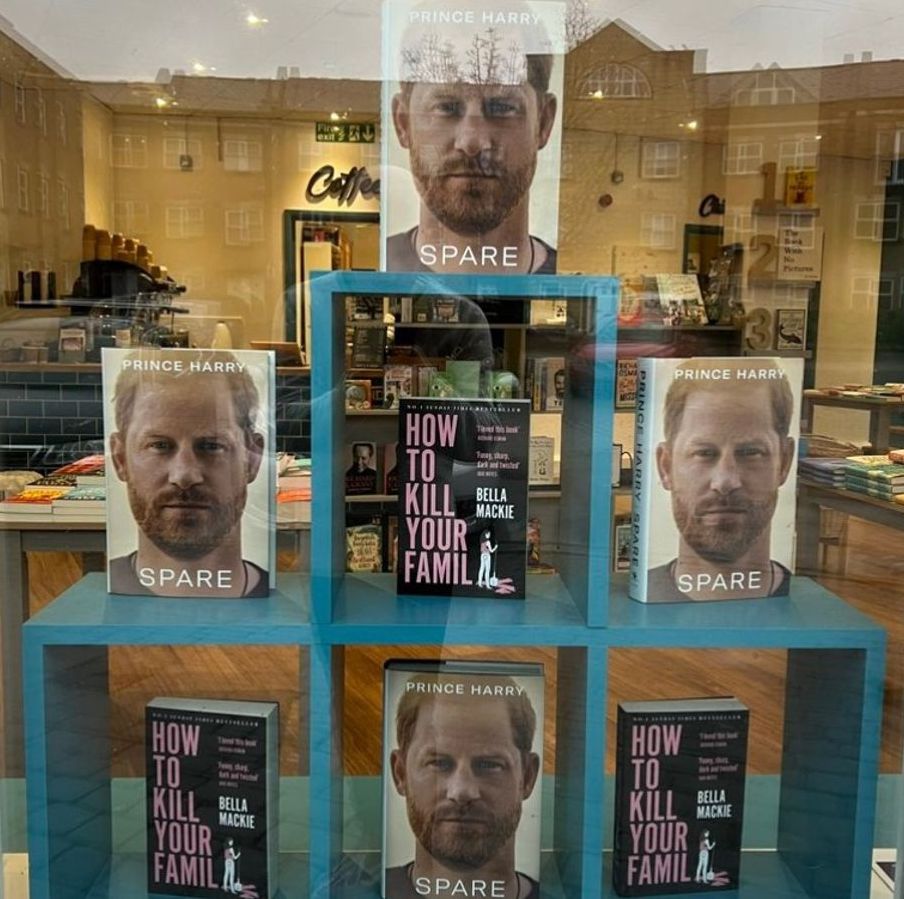
We caught up with founder and owner Alexander Call to delve into their monthly bundle subscriptions, author events, bestsellers, and the shift from being an online retailer into running a thriving cornerstone of their community. Oh, and a quick mention of that viral Prince Harry window!

Picture
You know, we're gonna do this every day, we're going to do a new quote every day, and we're going to post it as soon as we're open.
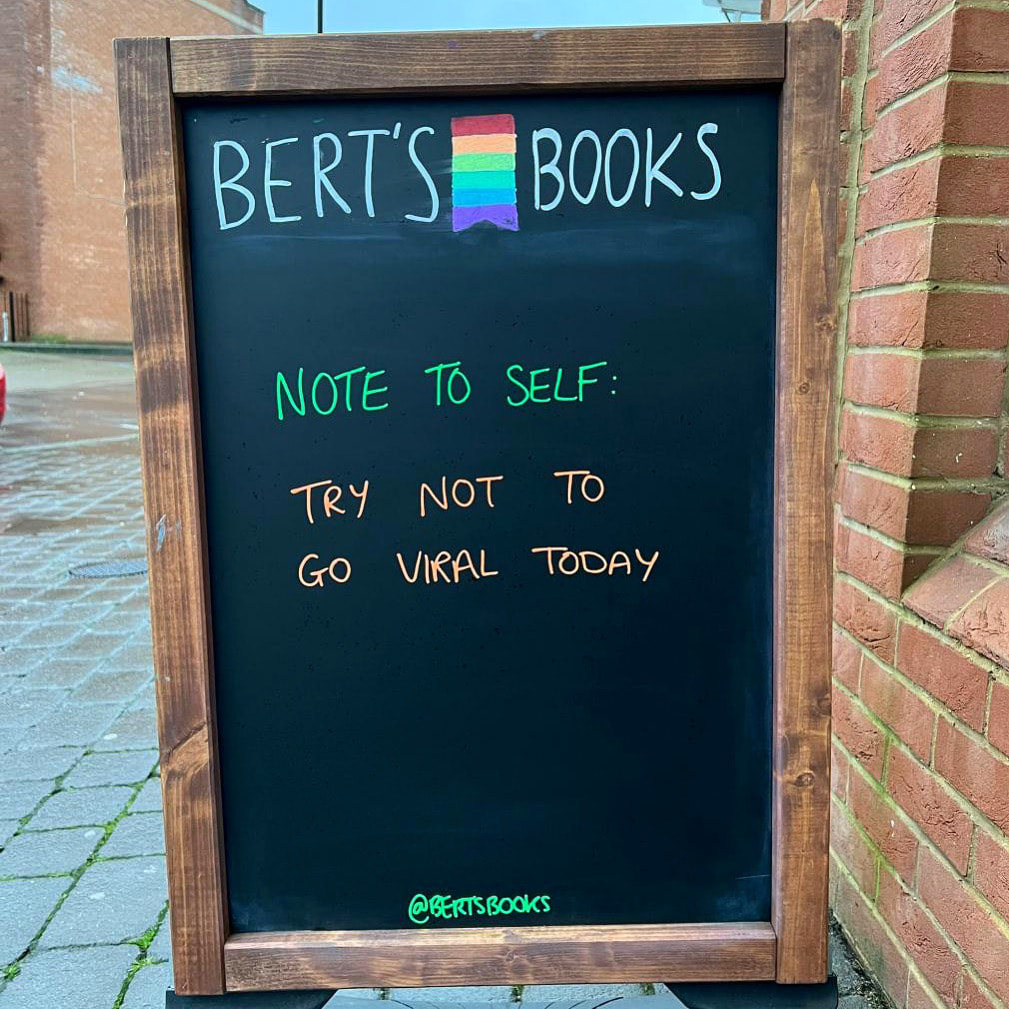
And it's just slowly built and built and built and now people look for it. People have come to expect it and want to see what we're putting on that day... And then two weekends ago I had one that had forty-five thousand likes on Facebook and a couple of thousand shares! It's just bonkers.
JR: So, how’s the shop been in the last week or so of January?
AC: Yeah, it’s alright. It's been picking up slightly so all is good. I'm a bit happier with it all now than I was when we last spoke.
JR: Oh, that’s good. I guess it's always a bit of a funny time especially when you've got that big question mark of January hanging over you.
AC: Well, that's it, you just don't know. Are people just not coming because it's January or has everyone just now decided to stop reading and no one's buying any more books ever again?
JR: Ha! Yeah, this is the new trend, we're just going to all stop and that over-hanging fear of Kindle from about 10 years ago has finally kicked in!
AC: That's it, and at some point everybody's just gonna go, ‘Nope! No more books, that's it, we're done!’
JR: How have you found the trend towards or away from paper books, physical books, and to audio or even Kindle? Did you see much of a shift during your time at WH Smiths at all or was it really since you made the move to your own shop that you’ve seen that audiobook/physical book relationship? ​
AC: That’s interesting, that’s an interesting question. I’m just trying to think back. I started at Smiths in their head office in 2006, so it would’ve been around the time that e-books etc. were all sort of taking off. I think there must have been a bit of a dip but I’m only really remembering it because we then spent a couple of years talking about the recovery of sales. Because it didn’t take long for everyone to go, ‘Oh, ok, this is fine’. Like, it’s not going to be the iPod moment. ​
JR: Sure. ​
AC: You know, we were still selling them. I think since I’ve become indie I would say I’ve noticed more of a shift to audio. I think that’s a relatively recent sort of shift. More so than e-books. ​
JR: Yeah and I guess from a publisher's perspective I suppose they just want people to be absorbing their books any way they can but even they must still want physical sales.
AC: Well, I assume but I don't know. I guess, I don't know what the cost differences are because although you've got no overheads and people aren't going to return great quantities of audiobooks, it's the upfront cost of the recordings.
JR: But you're right, I know more friends and family who've gone towards the audiobook thing in the last few years. Do you think it's maybe people's attention spans getting stretched?
AC: Yeah, do you know what? I think it's the rise of things like Spotify, and podcasts, people have become used to listening to long-form things now whereas before in the olden days - he says in air quotes - the thing with audiobooks was you're listening in the car and you've got 10 CDs [you] have to swap over etc., so I think now that we're all walking around with earbuds in our ears and working from home [more] I think that's probably a big part of it. People are now sitting there with time and no interruption.
JR: Yeah and I guess it's listening on the move as well. We're all so busy!
AC: Yes!
JR: And trying to sit down for the seven-plus hours it'll take to read that book, you know.
AC: Yeah, and I know people who say that they listen to an audiobook while doing the cleaning and I just think, ‘God, how can you do more than one thing at once?’ Even listening to an audiobook whilst you're cleaning, I'd end up cleaning the wrong thing! Or, like now, I'm on the phone, I'm sat actually at my desk and I've got the rota in front of me but I can't sit and fiddle around with the rotor and talk to you because I'll get something wrong.
JR: Sure. For years I used to read on the bus to work and sometimes that was an extra hour and a half to two hours a day that I could claim back for reading, which was lovely. I did that for a few years and it was great but then I started working in a bookshop which was outside of the city. I ended up driving everywhere and then suddenly my reading time just disappeared. 

It wasn't really until the last couple of years that I started getting into audiobooks and it was about trying to claim that time back. But there's this big thing at the moment of mindfulness and an awareness of time. We’re all so preoccupied and we are all so preoccupied with trying to fill in as much as possible, and you're right, you know, you can't just sit and focus on one thing anymore. You have to be multitasking!
AC: Yeah, that's the thing, everyone's always trying to and people start to feel guilty because they haven't read books that everyone else has read. I think that's the difference because there are two big parts of the market: people who read for a book, you know, they want to read for themselves; and then there's the bloggers and the tweeters and everyone on Booktok and ‘Bookstagram’. Some people are doing it to be influencers and some people just want to join in with the conversation and they go, ‘Oh god, they've read that book so I want to read that book’, ‘I want to join in the conversation’, ‘Oh god, where am I going to find the time to read that?’, and I do wonder if some of us - and I count myself in that - are losing the ability to enjoy reading because we're trying to get through so many.
JR: I guess, in your position as well, being in the bookshop, is that you'll get sent advance reading copies and proofs and manuscripts. So now you're not just trying to catch up, you’re working ahead.
AC: And working ahead there's a guilt, a massive guilt, you know. I've got proof copies that are excellent proof copies that people have sent me that I'm excited to read and I just haven't had the time. There are copies of books that I want to read but I've got books that I have to read for our various subscription boxes or like right now, reading a book that was published last year because we're talking about it in our book club tonight. So I have to finish it and I'm enjoying it but there's also that, ‘Oh god, it's not what I would have chosen to read right now!’
JR: Absolutely. I feel that kind of winter/spring guilt of not reading this year's books and I'm still kind of playing catch-up from the year before. Especially when I was working in the shop and all of my colleagues were telling me about their favourite books of the year and I was thinking, ‘Oh, I've got to catch up. I've got to read that too.’
AS: I've started talking to book club people and giving them two options every month to pick from. I try to do a theme sometimes, a very loose theme. Like the other week, I gave them the choice between Seven Husbands of Evelyn Hugo and The Seven Deaths of Evelyn Hardcastle, because they were made to go together. Death or husbands, which one?

But like tonight, I'm going to reveal to them that this time they've chosen Babel by RF Kuang and that's so great because I haven't read it but everyone was talking about last year. So it's giving me the chance to finally get around to reading it and if I hadn't offered it to the book club I would never go back to read a title that has already been released.
JR: And that's quite nice as well because you're going to absorb that differently, as a book club choice, rather than just reading in your own time. You need to be a bit more critical you need to take your time.
I don't know about you but I used to find the balance between trying to read the homework and reading for pleasure quite hard, so I would end up just ploughing through everything and then suddenly you're like, ‘God, I don't even remember that book because I read it so quickly!’
AC: Yeah! There are some books, you know, I was looking at some books on my bookshelf yesterday - and I mean, I'm terrible, people are going to disown me when I say this - I take the dust jackets off my books once I've read them because I like how they look better on my bookshelf without.
JR: Oh, you see I'm the opposite. I take them off when I read them and put them back on afterwards.
AC: Well, you see, I was looking at this book and I didn't recognise the title. If I had the dust jacket I might have remembered reading it; it's on my ‘I have read this’ shelf. So I had to quickly scan through and go, ‘Oh, I remember now.’
JR: But that's the thing about physical books, about having physical books, isn't it? It's being able to see that victory, that achievement, it's another box ticked and it's another thing on the shelf that's finished. And you don't get that digitally. You don't get the same sense of gratification.
AC: No. I've been doing a podcast  for a while last year I did two or three seasons and we've had a rest for a bit now but probably 30 episodes or so where it was Desert Island Discs but for books and authors would tell me seven books that they would put on their fantasy bookshelf you know and I always started it off by saying you know every book has two stories to tell the one that within the pages the story of like the story of Babel there it is but when you look at Babel or when I look at Babel on my shelf in a year's time  I look at it and go oh yeah I read that as part of the book club and this person said that or maybe it's completely unrelated to the book oh well I read that when I was sitting in the Park or something you know everything has a memory attached to
JR: It's like the thing from High Fidelity, isn't it, when John Cusack is talking about reorganising his vinyl collection auto-biographically? It’s that beautiful way of thinking about a collection, whether that’s vinyl or books or DVDs even, though these days DVDs aren’t as much a thing. But seeing those as having their own backstory in your life is quite important.
AC: And I think that's why my bookshelf is not arranged alphabetically or by genre at home it's just a space where I put a book and so now I've got this random collection of everything. So, any bookshelf that I look at will tell me also, like, ‘Oh, that's a surprise. I don't think I would have remembered that.’ It's a nice little aide-memoire, as it were.
JR: Absolutely. Right, let's go back to the beginning. Could you tell us a little about how you found that transition from going from an online retailer to being a physical bookshop?

We're talking very much about the physical now and being an online retailer I wonder if you had the same connection to the books that you have now. Do you find your relationships with physical orders different?
AC: That's a good question. So, nearly every book is packed by me, and you know, we tie a ribbon. My colleague Michael helps now a couple of days a week. I think the difference between [doing] it now in the shop is that it becomes less about the book and more about the person, whereas when I was doing it online, I was just sat there and I would tie a ribbon and think, ‘Well, that book is going to Newcastle’, but I wouldn't have the person in mind as much. Whereas now, I'll see that person in the shop and go, ‘Oh, well, you bought this, what did you think?’ So, I think maybe the connections is there still but it's sort of split between book and person.
Picture
JR: And do you think, now that you've got that kind of regular clientele, that you tailor your stock differently at all? ​
AC: Yes, to an extent. I mean, most of the stock is ordered because I look at it and go, ‘I like that!’, ‘I would like to read that’, ‘I like the look of that’, so we'll get a copy in. And the reason for that is because if we don't sell it I will read it, so there's a home ready and waiting. But there are elements now when I'm going through the catalogues or what have you and I might go, ‘Well, you know, I wouldn't read that but so-and-so might’. 
I've definitely had it where somebody's clocked a book from the range and come up to me and gone, ‘Oh, this looks really good’, and I'm like, ‘Well, I ordered it in especially for you, so I'm glad that you found it.’ Sometimes, I'll get it and they'll come in and I go, ‘Oh, this book, look at this, you might like this’; other times I'll let them discover it when they're ready to, and that’s quite nice. 
But there are definitely books I order in where I don't have a particular customer in mind. They're not for me and not for a particular customer but I know, you know, [for example] we sold loads of books about trees last year, here’s another book about trees. Somebody is bound to buy this. So, there's definitely been a shift in the way I buy or think about ordering books now.
JR: Let's give people a picture about the shop. Can you give us an idea of the size of the space and maybe the number of books you've got in stock and how you display them in store?
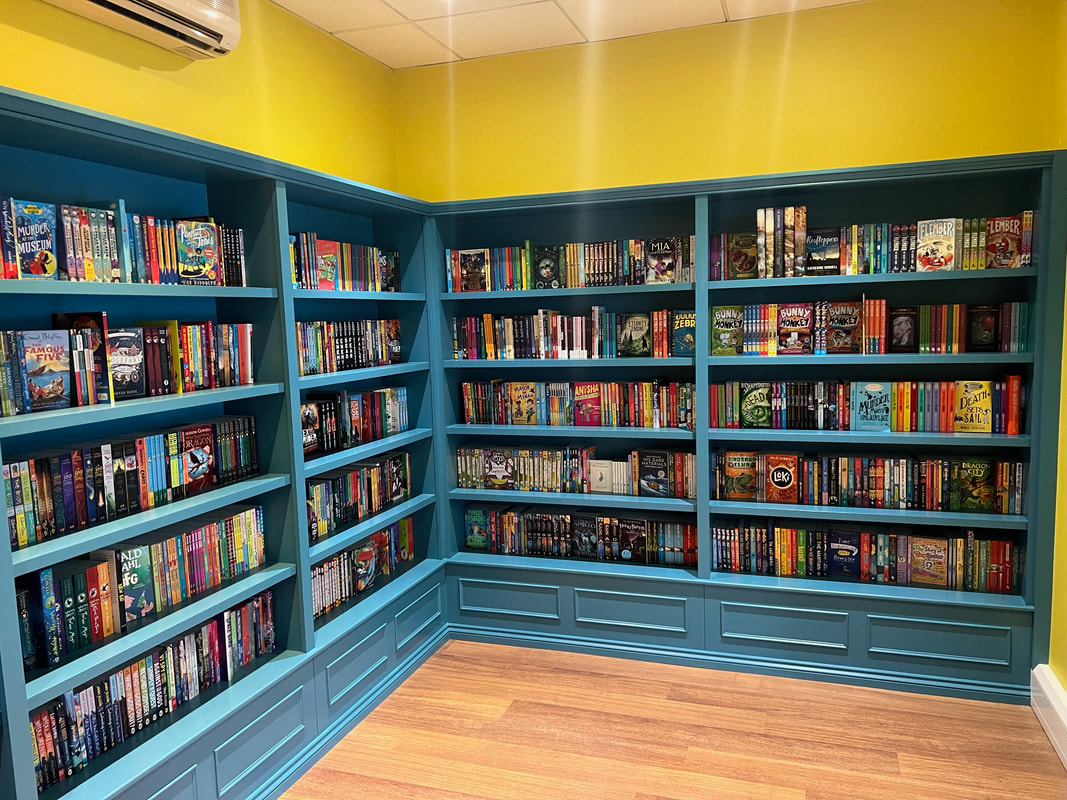
AC: Okay, well, where we are is largely a square - although there isn't a straight wall in the shop anywhere - and actually, if you look at the shop and the back room as a whole, from above, it basically looks like a wedge, like a doorstop. It gets narrower a narrow the further it goes back. But the first half is essentially a square. We've got five bookshelves down one and three down another and then six tables and a couple of extra shelves, so we're quite open. 

That's the one thing that a lot of people come in and say, you know, ‘Oh, it's much bigger than I thought it was!’ Because obviously the pictures we put online are all quite flat and we'll take a picture of one bookshelf and then another but they don't see the gap in between the two, so people are expecting it to be a narrower shop, but it's actually quite open. We've got big windows at the front which allow us to do a couple of nice window displays. We keep it all quite clean; no point of sale, I mean, there's a little bit of point of sale on the shelves but with a couple of our recommendations and a poster or two, but we don't have those big cardboard displays or massive spinners of books. You want people to be able to get around. As well, those big windows at the front mean it's all quite light and so really lends itself to the sort of modern feel and minimalism. Having said that, we've probably got about four or five thousand books, so it's more stock than you would initially expect.
JR: That's a really sizeable amount of stock for such a small space. How have you found managing that? It’s like spinning lots of plates, isn't it?
AC: I find it really easy. The guys who work for me can struggle a bit, they're never sure, because there's always more stock coming in than there is going out, it seems, and they'll come up to me with a pile of books and say, ‘Where do you want me to put this?!’ And I'm like, “You know, you'll find somewhere.’ 
I don't know, maybe it's because I'm a bit more confident with the stock that we have but I'll move things around or I'll take something off. But there are always seemingly slightly too many books. 
So, I've just ordered February's books, and I probably ordered in a hundred new books for February based on what I thought looked good. But that means a hundred books either have to sell out and come off the table or come out of the range to fit them in because we are full! The guys don't see it as much. What we'll do at the end of each day is go through what we've sold and will reorder one of those, or will reorder one of those; maybe we had two or three copies on the table but we probably only have room for one, so we won't order a replacement. Then there are books that when we sell a copy, and if we haven't sold that in maybe a few months, it varies. Sometimes it's just my gut, you know, and if we haven't sold something in six months but I love it, or I know that it's one I would recommend if somebody came in and asked for something specific, then I'll hold on to that one.
JR: And that's the power of having such a small team but also having the control you're able to get more creative with it and bring those kinds of personal favourites to the front sometimes.
AC: Yes, definitely and then there'll be times where, you know, it came out three months ago it's not sold a copy until now, let's say it came out in the middle of October we had x number of people in the shop since then and not one of them has picked up a copy until now, it's time to accept that nobody's interested in that book and we will not reorder it.
JR: Is that something that you all have a hand in as a team or do you all have separate roles?
AC: Largely, all have a little bit of a hand but Michael and I tend to, so, Michael works full-time, so in the days that I'm not in he tends to do those bits that I would, say. He looks at the stock management of the day and looks at what we might get in, but equally, Pedro is confident and Alice is confident that if we sold a book and they know that we've got another three copies somewhere, although they might not be responsible for doing the replenishment at the end of the day, they know to delete and to leave that off because we don't want to accidentally order another copy of that in.
There's quite a bit of crossover but largely yeah, we do have sort of our own areas of expertise. Michael covers me, he'll also do a lot of stuff on the website; adding new books, and sending out emails to customers if we need to. Pedro's brilliant at cleaning, and although he says he doesn't enjoy it if you leave him standing still for five minutes he will start cleaning something. Sally, you know, she only does one day a week so she'll also re-sort our clothbound classics which always sell really well for us in the shop, and she loves those books so is always monitoring them and I trust her, you know, if we've sold a bunch of Dostoevsky, then I can trust her to fill that gap.
JR: And that's great, it's nice that they all get their own parts to play and I think it's important to harbour that relationship with your staff.
AC: Yeah, and we all read different things as well. If somebody comes in asking for a specific recommendation and or they say, ‘I loved Elizabeth Strout’, for instance, both me and Michael will just refer to Pedro because we know that Pedro loves Elizabeth Strout, and we’ll say that Pedro is the man to talk to here. Whereas, sometimes they’ll send someone my way, depending on the types of books that they read. There’s definitely a very level playing field in the way that we work together, I think.
JR: You mentioned your book subscriptions before, I've had a good look through your monthly bundle options and it's quite an impressive selection. How do you manage that? I mean, for an outsider, that seems like a fantastic selection, but how to find maintaining it?
AC: It's really easy. So, we have two different types of subscription, there are our monthly - what we call our monthly subscriptions, but they're all sort of monthly subscriptions in one way or another - but we have our monthly subscriptions, where we select the books for. You might sign up to a crime and thriller one, in which case I'll send you two crime paperbacks that I've read and loved - and that's part of the needing to read ahead issue, that I've got books in for the subscriptions. 
And then the other type of subscription is basically where the customer has chosen what books they're going to get. We just take the hard work out. So they might say, you know, ‘I'm going to collect all of the Agatha Christie books’, so they sign up, they say to us, ‘I'm gonna collect all of them but I've got this one, this one, and this one already’, and we have a big spreadsheet which has all of our existing orders open. If you would order a book today we would add that order to this spreadsheet this evening, and then tomorrow stock would come in if we didn't already have it and we'd go down that list and go, ‘Right, here's this book that's going out today’, we'll package that up and send them out. And that list then goes into the future, so if you've signed up to receive every single Agatha Christie’s, of which there are about 70, there is a line for you every month for the next 70 months! 
Some people on our list have subscriptions that go into the 2040s. I suspect they might cancel before then, but for whatever reason it's still there, should they last or we last that long, but the line is ready for them to get that book.
If you selected, say, do you know the Macmillan Collectors Library? 
JR: Yeah, they're those beautiful little gold-edge hardbacks  - 
AC: - Yeah, so there's about 200 of them. And a couple of people have signed up for that as a subscription so we've got a line for that for each one. 

If someone said, ‘Oh, well, I really want this one from the collection’, I would look and go, ‘Well you're not getting that one until 2029 but I will swap it around and move things up.’ Once it’s set up it's really easy to manage.
JR: That must be nicely reassuring that you've got those ticking away in the background, especially if you've got a quiet January day and not much in the till.
AC: It's always nice to see the subscriptions going through, you know because it is a sale. 
JR: I mean, logistically that's a bit of a head-scratcher but I suppose you're right, once it’s all down on paper it's a relatively easy process to take over.
AC: And we kind of just monitor our sales by month, so actually, if those sales or those days are quiet, unless it's people ordering specific individual books on the website - which can actually be quite a low number - then at least we can remind ourselves we had a good week or we had a good month.
JR: And I guess, as independent bookshops, you can feel like you're maybe slightly adrift out there in the world and you're having to keep reminding yourselves to look at the big picture. Look at your busy months, look at how great Christmas might’ve been, or whatever. It's nice to be able to rely on all of those subscriptions going out.

Let's talk about the slightly larger picture of the book-selling landscape in Swindon. I know you've got a local  Waterstones, but can you tell us about the town a little and how you fit in as Bert’s Books?
AC: So, Swindon is about a quarter of a million people, or what is classed as Swindon, but the town itself is a bit odd. It started being built about 100 years ago on top of the hill and then when the railway came to Swindon the New Town was built at the bottom of the hill. So, there's Old Town and the town centre and there are two different areas, they're only about five minutes away from each other, but because ones at the top of the hill and ones at the bottom you kind of get people who live and shop in one and people who live in shop in the other. 
Some people will come into Old Town for the hairdressers or little bits and pieces but most of our regulars live in the actual area where the shop is. 

Then, in the last 50 years, I would say, there's been an expansion towards the north of the town and there's a big shopping centre there which is got a huge ASDA it's got a next etc and it's all most kind of its own little mini town centre. There are almost three town centres in Swindon, if you look at it on a map the main town centre is very much in the south so I think we get very few people from the very north part coming to us because the Old Town is essentially right at the bottom. And there's no real reason to come to Old Town unless they're visiting a specific shop or person. 
JR: Absolutely, and I guess you are quite uniquely placed because you don't have any other booksellers in your immediate area, is that right?
AC: That's correct. There's a Waterstones in the main town centre and a WHSmiths, but in Old Town there is nothing else. And to be honest, we serve very different purposes. When we turned up I don't think they will have noticed a dropping in the customers and equally when they disappear we wouldn’t pick up any extra trade. It's nice that we don't have any direct competition.
JR: It’s nice as well that you’ve built relationships with your customers over the last couple of years. Do you think that's been made easier because of where you are or is it more difficult?
AC: I think it's probably made a bit easier because we're right by a car park. We're by the main car park in the Old Town area so anyone who is choosing to drive to do their main shop in the Co-op or something, I think that location helps us. But equally, we get a lot of people who are just out for a walk and they're going to walk past us because they're going to go to the park or they're going to go to the ice cream shop or the hardware store which is just by us, or a lovely little cafe, and people will make a morning of it. Certainly our regulars at the weekend. We become part of people's routine, I think.
JR: Do you think that extends to your author events as well? 

Do you feel like you see a lot of the same faces or do you have people who, say, maybe gravitate more towards a crime fiction event or historical fiction? You may not see those people come to everything.
AC: Some people come to everything if they can. Some people just love books and we'll find those who will come and find the whole process fascinating, so they'll come to everything. But other people will say, ‘Oh, well, I'm not interested in fantasy so I'll skip that one’, or, ‘It's not quite for me’. 
We've had it before when one of our customers, I think this was last May, we had three events during May and we had another event on the first of June which was at the local theatre and they said, ‘Right, well, we're going to come to this one but we're not going to come to the others because we want to support you but we can't do all!’
JR: Of course, yeah, it's a lot to ask for anyone to commit to.
AC: Yeah, but that was nice, that they were like, ‘Well, you know, you're doing something and we should support you so we're going to pick one of them’, I think. Maybe for them, [events] aren’t necessarily a part of their book world, but actually, they know they're important to us and they keep us going so they’ll be like, ‘Oh, well, we'll come and support that!’
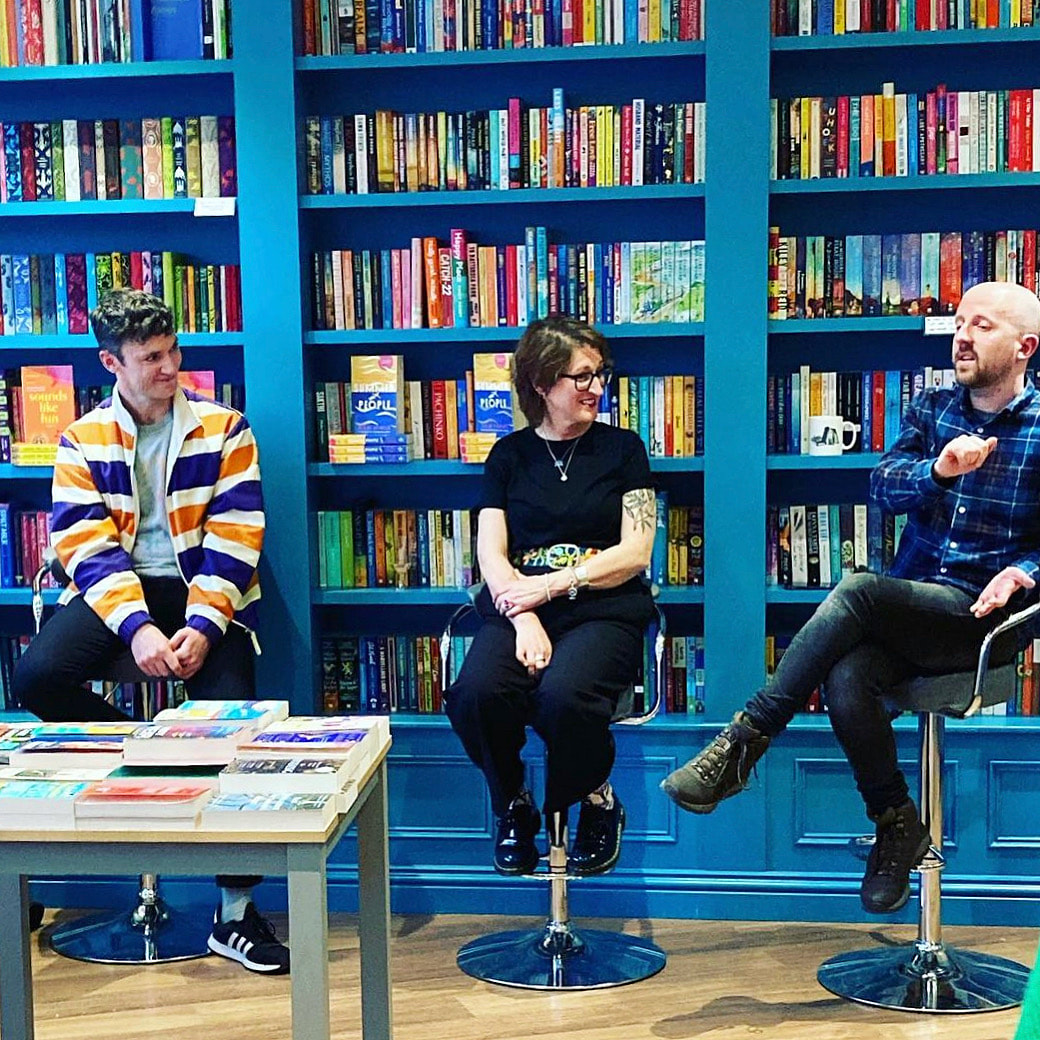
JR: How do events work for you in terms of happening in-store? I know you said that you've occasionally used external venues…
AC: We do most of them in the shop. We have another one next week, we have a second one which is not in the shop. The Art Center can probably get in about 200 people and it's just across the other side of the car park from us so it's a perfect location, and they had people like Brian Bilston the last year so we went along and sell, but it wasn't our event. We've got Jasper Fforde next week, we had TJ Klune and Juno Dawson last year in that venue, and they're really good because they put us in front of more people who wouldn't necessarily come to an event at a bookshop. 
Marketing is very much, you know, you're talking to people who you're always talking to. Whereas, doing something in a theater you've got this extra group of people who go to the theatre and people who don't necessarily know what else is on. That's always quite nice seeing a meeting some new people.
JR: Obviously, with these external ones you've got a slightly larger venue, slightly larger reach, but do you find that they pay off in terms of those new customers coming back to you?
AC: It's not something I can really quantify, I think. We definitely see people come to us who've said, ‘Oh, well, I came to this event or what have you’, but we also have people who, like with the TJ Klune last year, a lot of people came who don't live in the area and wanted to see them, and so, a lot of them haven't come back because they don't live around this area.
JR: Sure.
AC: But there's such an element of word of mouth around our customers, of building customers, that every time we do something like that we'll gain maybe a customer who will come back and maybe bring another customer next time, so it's slowly adding on. But I couldn't tell you for sure where everybody discovered us from.
JR: Yeah, so talking about bookshop reach online, it can be quite tricky for smaller indies  when you put something out into the world and you feel like it's just hitting the same people. Do you use any other form of advertising or any form of marketing for your events or, say, your book subscriptions to find a new audience?
AC: No, I don't pay for any marketing, really. Occasionally, if an event is going a little slowly I might put 20 quid on a bit of Facebook advertising but we don't always really see a result from there. And I'm very lucky in that occasionally the local radio station, which is just around the corner, will occasionally have me on to do what they call Wiltshire News and have people from various people around the county talk about different things like what's in the news that day, and we always have an opportunity to plug our events in, so I just take any opportunity. If anybody gives me a platform I'll just jump on it!
JR: It's nice that they ask you. It's nice that they're choosing to support an independent like yourself.
AC: Yeah, yeah, definitely. 
JR: Well, on the subject of plugging events and platforms, we have to also talk about your bookshop sign. Could you tell us a bit about that and how that started?
AC: So, for those who don't know, we have a blackboard that we put out the front of the shop and the reason we even have a blackboard is because we sell coffee in the shop. On one side is just a list of the different kinds of coffee that we sell and the prices, and it was a case of, ‘Well, what do we do on the other side?’ 
And well, I thought we could use it to advertise our events and things like that, but there were days when we didn't have anything to advertise and I didn't want to just have the same message out there all the time, you know. I've got an event coming up in April and there's no point in having that on there now for the next two months! So we came up with the idea of putting a silly quote on it. I think one of the first things that we did was a Britney Spears song called Boys, and we just change the lyrics of that to books. We put silly little things like that on it and we got one or two likes [online] and it's just actually a nice way of marking the beginning of the day. It enabled us to post some new content and remind people that we were open.

So I said to my colleague Michael, ‘You know, we're gonna do this every day, we're going to do a new quote every day, and we're going to post it as soon as we're open.’ Because that's a way of putting something out there and not having to come up with, you know, ‘Oh, well, we've got this book for sale.’ It's just something people can see on their Facebook page, on their Instagram, Twitter, wherever. ‘Oh, God, yeah! The book shop, I remember!’, ‘Oh, I might go there today’... And that was the sort of idea behind it.​
Picture
And it's just slowly built and built and built and now people look for it. People have come to expect it and want to see what we're putting on that day. And we get some that have maybe fifty likes, some that get maybe a couple of hundred, and then two weekends ago I had one that had forty-five thousand likes on Facebook and a couple of thousand shares! And it's just bonkers. They sometimes appear on Reddit, BuzzFeed, BuzzFeeds post of the week, and it's just insane how people have come to embrace them!
JR: It's a great example of one of those things where people latch onto it. It's one of those brilliant uses of social media where it doesn't cost you anything. You’re getting a far greater reach than you might get if you said, ‘Hey, look! We're open, we've got coffee, we've got books!’ It's a nice little anchor point.
AC: Somebody said a couple of days ago, we were talking about the blackboard with a regular, you know, they maybe come in once to twice a month, and they were saying that they found themselves looking at it once on Instagram and said, ‘It's insane that you basically post the same picture every single day!’ Because we do. We just have the blackboard with the saying, the same sort of thing around it, and it's largely the same picture every day. But yeah, ‘I find myself looking for it’, he said.
JR: And that's quite special really, you don't get many opportunities to do that, I guess. As a business, certainly as a bookshop. Because everything we do on a daily basis is about the choice, it's about the selection, there's always something new to share. It is quite nice to have something that people are looking out for.
AC: And actually, it is a bit, I don't know if lazy is the word, but I don't always remember to post a picture onto Instagram, or Facebook, of new books, because I'm busy sending them out or because I'm busy in the shop or I just get tired. And then I get to nine at night and I go, ‘Oh! I didn't put anything on Instagram!’ But actually, by doing the blackboard it means we are posting something everyday, even if I don't post anything else it’s still content going up and reminding people that we exist.
JR: Yeah, feeding the machine one way or another!
AC: Yeah, feeding that algorithm.
JR: So, let's just finish up by talking about yourself. I was wondering if you can tell us a little bit about your background and how you got into bookselling, because am I right in thinking you started in WHSmith first?
AC: Yeah, yeah, so I started as a bookseller, well, actually, I started on their front tills one Saturday In Swindon. It was an easy job to go for, you know, this was back when shops had staff. There would have been sixty people working for Smiths, and it was an average sized store, across the week. And now there's probably twelve people who work there across the week. So yeah, I would do the Saturdays and I just found that I quite enjoyed that customer interaction, talking to people, so I was doing overtime, blah, blah, blah. But three years down the line, a job came up in the head office and I went for it. That was within the book team and it was essentially the other side of the job that I was doing in the shop. I was at that point doing all of the promotional spaces in the book department, every time the charts changed I would put the new ones out, every time new books came in I would be in charge of redoing that display as per the instructions from head office. And so now I was the one giving the instructions out to all the stores. I was responsible for coordinating all that. And I did that for thirteen years on and off, well, I say on and off, I started out as a team of one and I finished as a team of four that I was in charge of. We’d outgrown our remitm we'd grown what we did, but also it was the same core responsibilities. Then I was made redundant in 2019 and I thought, ‘Well, what am I going to do now?’ I was quite happy to be made redundant. I was ready to go. But I didn't really know what I wanted to do, so I thought I'll take a year out. I was already blogging about the books I was reading and I had a reasonable sized audience, so I thought, ‘Well, if I concentrate on that I can still put my blogs out, maybe add a link or two to the bottom.’ And Bookshop dot org didn't exist then. I think if it had I would’ve just set myself up with an affiliate account and put a link to them on my blog and things would have been what they were.

But, I had to create a transactional website, which was never intended to be very big. I thought I could just put one book on there, talk about that book and when I've read another book, talk about that book. And people started asking fairly quickly, ‘Oh, that sounds really good, I'm going to order that from you but I'm also after this book, can you get that one for me as well?’ And I was like, ‘Oh, yeah sure, why not.’ So I started adding more and more and a year down the line, my year out, I was thinking I have to do something to carry on with this. This seems like it might have legs. I was thinking maybe I put some money into it. And then the pandemic hit and our sales tripled overnight! So I didn't have to put any money into the website at that point because of the number of customers we were getting we’d basically fast forwarded a couple of years in terms of our customer journey and in gaining customers.
JR: And that must have been such relief, knowing that you have a customer base before you even decide to open a bookshop. ​
AC: Yeah so that was the thing, I was looking during the pandemic, I had a couple of conversations beforehand about it and I was like, ‘Oh, maybe, I'm not sure’, and then it got to a point where the website was at a certain size that it would pay - the profit on the website would pay - the rent on the shop. So, actually, the risk was relatively minimal. My biggest overhead would only be staff and if no one came into the shop I didn't need staff! I could treat it as a bit of a warehouse and just spend my time all by myself, stocking up, putting up books and sending them out. As it happens, people came and found the shop and we've got an audience for both now, so even on our worst days in the shop - you know, going back to talking about subscriptions -  even on our worst days in the shop, if it's really rainy or really cold - or it's just really January! - we know that the website’s there and it's it's paying the rent. So it's never too disheartening.
JR: Which must be quite rare in the world of indie bookselling, I would have thought, to have such a safety net.
AC: Yeah, I suppose. I don’t talk to a huge number of indie bookshops. I talk to some of them online and what have you and I know some of them are struggling at the moment, because of various factors, cost of living, the weather, their locations, and they don't have as big a website offering or service to fall back on. Whereas, because we're consistently pushing it all the time It doesn't really dip, it's just always there to push if we need to. There are times of the month when things are quiet and I think let’s give the website an extra push and make the website a bit busier, and equally, there are times when the website is so busy that I’m like, ‘I’m behind on sending the orders out!’ You may find that I’m tweeting a lot less about specific books and I’m just tweeting nonsense about sausage sandwiches or something because I’m not necessarily wanting more sales at that point. Can’t keep up. But, I want people to still know that we’re here, so, when I do I need to push the website again, they’re there. ​
JR: I guess, it's the joys and the downside of a small team with quite a lot of success is having to find a balance between being too busy and still engaging with everything that's on your plate.
AC: And the trouble is that whenever you have those big spikes, like that moment at the beginning of the pandemic when sales tripled, or when we went viral with our Prince Harry window and sales massively spiked, then you’re just not ready for a big change. If you have a gradual change it's fine. Sometimes you do get these big step-ups and you have to adapt and if you can adapt you're able to maintain that big step up, and if you can't adapt it'll drop down fairly quickly to what it was before.
JR: I guess you've got a few of these kinds of spikes under your belt now to know that you can handle it. ​
AC: Yeah, and you know there's always a backup plan. We still pack up books five days a week, I work from home three days a week on emails and the other four days of the week I'm in the shop. I work seven days a week. But if needed, if we’re that behind, I’ll go in [in the evening] and I’ll pack up some more books so that they’re ready to go out [the next day] and then that’s an extra day’s worth of packing. Or, I can go in on a Sunday and do a load out the back, or I could hire somebody, you know. If things were to double on the website overnight and stay at that level well then we just hire someone who works evenings and just packs books and listens to their podcasts or whatever they choose to do. ​
JR: That would be a nice problem to have! Let's just finish up talking about books then.

I know that you've got your ‘Pillar of Popularity’ in store. What are your go-to staff recommendations?
Picture
AC: So, I always find that really difficult, when people come into the shop and ask for a recommendation, you know, something new. Because I’m always reading ahead. So, I’m always a bit like, ‘Oh god, well I read this, but oh, it’s not out yet’, you know. So we have tables of stock where we tend to put the new stuff and when somebody asks for a recommendation I’ll look at that and go, ‘Oh yeah, I read that nine months ago but I think it’s only just come out, so try that one!’ 

So, right now I’m looking forward to being able to recommend Sometimes People Die [Simon Stephenson, The Borough Press] which is set in a hospital and is coming out in paperback at the end of February. I recently read that and really, really liked it. But it’s a struggle to talk about it at the moment because I could get them a hardback because I don't want lots of hardback stock when the paperback iscoming soon. And I’ve just read The Actor by Chris MacDonald [Michael Joseph] which is a new one in hardback and is so intense, it’s a thriller, and is one that I will definitely be recommending to a lot of people at the moment. ​
JR: Brilliant, they’re a great couple of picks. 

Now that you’ve had a full month of the year so far, are you able to pick out one or two books that have stood out for you as performing better than others or any bestsellers so far this year?​
AC: Yes, our two book club picks. We do two book clubs in the shop and they’re probably our bestselling books of the year so far. I always feel like they’re selling but they’re kind of just selling because I’ve made people buy them rather than natural pickups. So, another one that’s selling really well in the shop at the moment is Murder on Lake Garda by Tom Hindle [Century] and I quite like it when something like that sells because I haven’t read that yet. That’s not selling because of me, that’s selling because people are picking it up. Legends & Lattes [Travis Baldree, Tor] is another one that's selling really well. ​
JR: And I guess if you’re balancing books and coffee, that’s quite a nice pick as well.
AC: Yes!
JR: Finally, are there any events coming up that you’d like to push as a final goodbye plug? ​
AC: At the end of February we’ve got an event with Backy Taylor, Cesca Major and Holly Miller, and then we’ve got Harriet Tyce and Sarah Hillary coming in April. We’ve got another couple of events in April that haven’t quite been completely confirmed but we’re looking forward to doing other things with AJ West later in the year, we’re hoping to get Will Dean back in, so there are quite a few coming up which should be good. Oh, and Adele Parks will be coming at the end of March so we’re looking forward to having an event with her as well. ​
Picture

If you enjoyed reading about these staff recommendations and events, make sure you pay a visit to Bert's books in person or online to show them your love this February, and beyond. 

Opt into more ...

Place an order
Contact us
​Events
About
© OPT INDIE BOOKS 2025. ALL RIGHTS RESERVED.
Picture
  • OPT IN
  • Spotlight
    • Bookshops
    • Publishers
  • Events
  • Books of the Year 2025